Emergent Care / Stabilization:
For severe anaphylactic reactions, epinephrine and other vasoactive medications, fluids, and systemic glucocorticoids are required emergently.
Diagnosis Overview:
Arthropods comprise a wide invertebrate phylum that includes insects (eg, bees, wasps, fire ants, mosquitoes, chiggers, fleas, and gnats) as well as arachnids (eg, ticks, mites, spiders, scabies, and body lice). While most arthropod bites are a simple nuisance, others may be vectors of disease or be toxic.
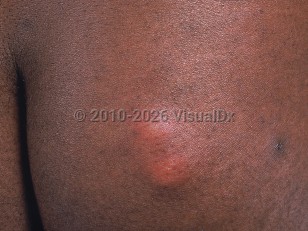
Most arthropod bites cause a localized, self-resolving inflammatory reaction manifested by edema, erythema, pain, burning, and pruritus. However, some individuals, particularly those with atopic conditions and immunodeficiencies, may develop skeeter syndrome: a robust, local immunoglobulin E (IgE)-, immunoglobulin G (IgG)-, and T lymphocyte-mediated hypersensitivity response to mosquito saliva. Skeeter syndrome can present with vesicles, bullae, fever, and lymphadenopathy.
Arthropod bite reactions generally may be more pronounced in immunocompromised individuals. An exaggerated, sometimes bullous reaction to an arthropod bite is characteristic of certain immunosuppressed states, especially a hematopoietic malignancy or HIV disease.
Less commonly, benign arthropod bites can cause systemic reactions, including anaphylaxis.
Clinically important envenomations in the United States include widow spider bites (Latrodectus), which may cause neuromuscular symptoms such as painful muscle spasms and autonomic effects, and recluse spider bites (Loxosceles), which may be overdiagnosed and usually resolve with conservative management but may rarely progress to necrotic lesions or systemic hemolysis. Hymenoptera stings (eg, bees, wasps, hornets, fire ants) are the leading cause of arthropod-related mortality due to anaphylaxis, requiring prompt recognition and treatment. Other arthropods (eg, mosquitoes, flies, ticks) typically cause mild local symptoms but are important as vectors for infectious diseases such as African tick bite fever, Lyme disease, Rocky Mountain spotted fever, a variety of encephalitides, and malaria.
There are highly variable global distributions of insects and arthropods. In returning travelers, insect bites are the fourth most common skin complaint diagnosed.
Additional related topics: scabies, tick bite, mite dermatitis, body lice, chigger bite, bedbug bite, flea bite
Arthropod bite or sting in Adult
See also in: Cellulitis DDx,External and Internal EyeAlerts and Notices
Important News & Links
Synopsis

Codes
ICD10CM:
T63.481A – Toxic effect of venom of other arthropod, accidental (unintentional), first encounter
W57.XXXA – Bitten or stung by nonvenomous insect and other nonvenomous arthropods, initial encounter
SNOMEDCT:
409985002 – Arthropod bite wound
T63.481A – Toxic effect of venom of other arthropod, accidental (unintentional), first encounter
W57.XXXA – Bitten or stung by nonvenomous insect and other nonvenomous arthropods, initial encounter
SNOMEDCT:
409985002 – Arthropod bite wound
Look For
Subscription Required
Diagnostic Pearls
Subscription Required
Differential Diagnosis & Pitfalls

To perform a comparison, select diagnoses from the classic differential
Subscription Required
Best Tests
Subscription Required
Management Pearls
Subscription Required
Therapy
Subscription Required
References
Subscription Required
Last Reviewed:07/06/2026
Last Updated:07/27/2026
Last Updated:07/27/2026
 Patient Information for Arthropod bite or sting in Adult
Premium Feature
VisualDx Patient Handouts
Available in the Elite package
- Improve treatment compliance
- Reduce after-hours questions
- Increase patient engagement and satisfaction
- Written in clear, easy-to-understand language. No confusing jargon.
- Available in English and Spanish
- Print out or email directly to your patient
Upgrade Today
Arthropod bite or sting in Adult
See also in: Cellulitis DDx,External and Internal Eye