Lichen simplex chronicus in All Ages
See also in: AnogenitalAlerts and Notices
Important News & Links
Synopsis

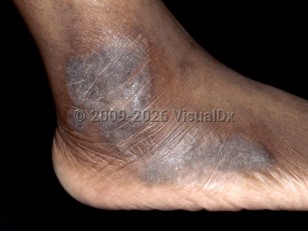
Lichen simplex chronicus (LSC) is a lichenified, well-demarcated, scaly plaque that is induced by chronic rubbing and/or scratching. Coexisting papules may also be observed (prurigo nodularis), as may excoriations. As these plaques are self-induced, LSC is almost always found on areas that are within hand's reach, most commonly on the back of the head and neck in women and in the genital area in men. LSC is commonly observed in uncontrolled atopic dermatitis and in other dermatoses that have pruritus as a feature (eg, insect bites, scabies). When LSC is observed on relatively normal skin with no obvious underlying cutaneous (or systemic) precipitants, psychological factors are thought to play a significant role.
Codes
ICD10CM:
L28.0 – Lichen simplex chronicus
SNOMEDCT:
53891004 – Lichen simplex chronicus
L28.0 – Lichen simplex chronicus
SNOMEDCT:
53891004 – Lichen simplex chronicus
References
Subscription Required
Last Updated:09/21/2025
 Patient Information for Lichen simplex chronicus in All Ages
Premium Feature
VisualDx Patient Handouts
Available in the Elite package
- Improve treatment compliance
- Reduce after-hours questions
- Increase patient engagement and satisfaction
- Written in clear, easy-to-understand language. No confusing jargon.
- Available in English and Spanish
- Print out or email directly to your patient
Upgrade Today
Lichen simplex chronicus in All Ages
See also in: Anogenital