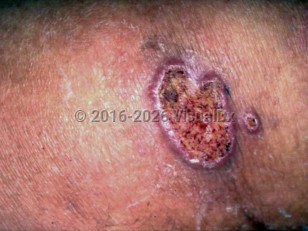
Paracoccidioidomycosis, also known as South American blastomycosis, Lutz mycosis, Brazilian blastomycosis, and paracoccidioidal granuloma, is a systemic mycosis caused by temperature-dependent dimorphic fungi belonging to the genus Paracoccidioides. The infection is primarily associated with species within the Paracoccidioides brasiliensis complex (Paracoccidioides brasiliensis sensu stricto, Paracoccidioides americana, Paracoccidioides restrepiensis, and Paracoccidioides venezuelensis), and it may also be caused by Paracoccidioides lutzii.
There are 2 forms of paracoccidioidomycosis: The chronic form is more common, affecting around 90% of patients and occurs generally in those older than 16 years. It usually occurs in men aged 30-50 years living in rural and agricultural areas of Mexico, Central America, and South America, especially Brazil. Pulmonary, mucocutaneous, and adrenal involvement typify this form. The acute-subacute form mainly occurs in those younger than 16 years, affecting children and adolescents, with no sex predilection, and it may also be seen in older individuals who are immunocompromised. In this form, widespread dissemination throughout the reticuloendothelial system may occur, including liver, spleen, bone marrow, and lymph node involvement.
The fungus is normally found in soil and is acquired by inhalation. Rarely, infection may occur via direct inoculation into the skin or mucosa following traumatic implantation, resulting in localized cutaneous or mucosal disease. Upon inhalation, the pathogen usually causes an asymptomatic pulmonary infection. The disease may then progress to either the acute-subacute form, which can develop within around 45 days of exposure, or the chronic form, resulting from reactivation of the primary infection and manifesting months or years later. In travelers to endemic areas, the mean time to presentation was 15 years, suggesting a long dormancy before disease presentation.
Pulmonary infection is the most common and is found in 70%-80% of patients. Disease is localized to the lung in 25% of cases. This is followed by dissemination to the skin and mucosa (around the pharynx, the mouth, and occasionally the anus), lymphatic system (especially cervical nodes), adrenal glands, liver, and spleen. Central nervous system disease (brain lesions [abscess, granuloma, nodule, or cyst] or less commonly meningitis) is typically associated with the chronic adult form, whereas bone involvement is seen predominantly in the acute-subacute juvenile form, although it may also occur in chronic disease. The clinical course is usually chronic and progressive over months to years, with associated weight loss and chronic cough.
Paracoccidioidomycosis
Alerts and Notices
Important News & Links
Synopsis

Codes
ICD10CM:
B41.9 – Paracoccidioidomycosis, unspecified
SNOMEDCT:
59925007 – Paracoccidioidomycosis
B41.9 – Paracoccidioidomycosis, unspecified
SNOMEDCT:
59925007 – Paracoccidioidomycosis
Look For
Subscription Required
Diagnostic Pearls
Subscription Required
Differential Diagnosis & Pitfalls

To perform a comparison, select diagnoses from the classic differential
Subscription Required
Best Tests
Subscription Required
Management Pearls
Subscription Required
Therapy
Subscription Required
References
Subscription Required
Last Reviewed:02/22/2026
Last Updated:02/25/2026
Last Updated:02/25/2026
Paracoccidioidomycosis