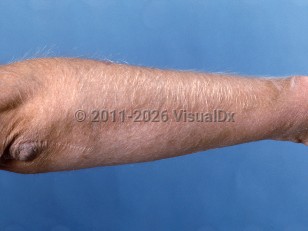
Acquired hypertrichosis lanuginosa, also known as hypertrichosis lanuginosa acquisita (HLA) or "malignant down," is a rare condition characterized by the rapid appearance of generalized nonpigmented lanugo hairs secondary to an underlying malignancy. Lanugo hairs are fine hairs with little or no pigment and resemble the fine hair seen in some infants shortly after birth. HLA classically affects the face and ears at onset; sites such as the eyebrows and eyelashes may grow up to several centimeters. Other sites commonly affected are those with limited hair growth (eg, nose and forehead).
HLA shows a strong female predominance (approximately 70%) and typically occurs between ages 40 and 70 years. HLA is classically associated with colorectal cancer followed by lung and breast cancer in women, and lung and colorectal cancer in men. It has also been described in association with other solid organ (eg, ovarian, uterine, bladder, gastric) and hematologic (ie, lymphoma, leukemia) malignancies. Although HLA is typically associated with advanced malignancy and poor prognosis, it has also been identified in early-stage malignancies. HLA may be accompanied by additional paraneoplastic signs or manifestations of internal disease, such as glossitis, oral hyperpigmentation, papillary hypertrophy of the tongue, taste or smell disturbances, acquired ichthyosis, lymphadenopathy, acanthosis nigricans, and the sudden appearance of multiple seborrheic keratoses (ie, sign of Leser-Trélat).
Hair growth has been reported to occur up to 2.5 years before the malignancy is identified or up to 5 years after the cancer diagnosis. The etiology of tumor-associated HLA is presumed to be the result of a tumor-secreted product, although specific biochemical or hormonal causes have not been identified to date.
Acquired hypertrichosis lanuginosa
Alerts and Notices
Important News & Links
Synopsis

Codes
ICD10CM:
L68.1 – Acquired hypertrichosis lanuginosa
SNOMEDCT:
201160005 – Acquired hypertrichosis lanuginosa
L68.1 – Acquired hypertrichosis lanuginosa
SNOMEDCT:
201160005 – Acquired hypertrichosis lanuginosa
Look For
Subscription Required
Diagnostic Pearls
Subscription Required
Differential Diagnosis & Pitfalls

To perform a comparison, select diagnoses from the classic differential
Subscription Required
Best Tests
Subscription Required
Management Pearls
Subscription Required
Therapy
Subscription Required
References
Subscription Required
Last Reviewed:05/26/2026
Last Updated:05/27/2026
Last Updated:05/27/2026
Acquired hypertrichosis lanuginosa