Contents

SynopsisCodesLook ForDiagnostic PearlsDifferential Diagnosis & PitfallsBest TestsManagement PearlsTherapyDrug Reaction DataReferences

Information for Patients

View all Images (35)

Acanthosis nigricans in Child
See also in: Anogenital
Other Resources UpToDate PubMed

Acanthosis nigricans in Child

See also in: Anogenital
Contributors: Allison Bai, Kyle Cheng MD, Belinda Tan MD, PhD, Oyetewa Oyerinde MD, Callyn Iwuala MD, Susan Burgin MD
Other Resources UpToDate PubMed

Synopsis

Acanthosis nigricans (AN) is a localized skin disorder typically characterized by symmetric, hyperpigmented, velvety plaques in intertriginous areas like the posterior neck and axilla. It is due to overstimulation of fibroblasts and keratinocytes via insulin-like growth factor receptors and tyrosine kinase receptors. AN is most commonly associated with obesity, with the prevalence of AN in obese pediatric populations ranging from 49.2% to 67.6%. AN is furthermore a visible marker of insulin resistance, a precursor to the development of type 2 diabetes. One pilot study of 507 children found that the combination of AN and an increased body mass index (BMI) was linked to an 80% incidence rate of insulin resistance.

Key associations are grouped as follows:
  • Insulin-resistant states – Most common; linked to diabetes, high BMI, metabolic syndrome, and polycystic ovarian syndrome (PCOS), endocrinopathies (acromegaly and gigantism, pseudoacromegaly, Cushing syndrome, and Addison disease; rarer associated syndromes include Prader-Willi syndrome, Alström syndrome, MORFAN syndrome [mental retardation, pre- and postnatal overgrowth, remarkable face, and AN], ataxia-telangiectasia, hyperandrogenic states, hypogonadal syndromes), and insulin-resistant states (type A/B syndromes, leprechaunism [Donohue syndrome], lipoatrophic diabetes, Rabson-Mendenhall syndrome, pineal hypertrophic syndrome, and acral hypertrophy syndrome). Type A refers to patients with HAIR-AN (hyperandrogenism, insulin resistance, and AN). Type B is typically seen in women who have uncontrolled diabetes mellitus and autoimmune diseases (systemic lupus erythematosus, scleroderma, Sjögren syndrome, and Hashimoto thyroiditis) and is associated with the formation of anti-insulin receptor antibodies.
  • Familial / syndromic – These include FGFR2- or FGFR3-related syndromes such as Crouzon syndrome with AN, Beare-Stevenson cutis gyrata syndrome, severe achondroplasia with developmental delay and acanthosis nigricans (SADDAN), thanatophoric dysplasia, and metabolic syndrome, as well as HRAS-related Costello syndrome. Patients with FGFR-related syndromes often have craniosynostosis and characteristic skeletal or facial features, while Costello syndrome is associated with redundant velvety skin, periorificial papillomas, deep palmoplantar creases, and cardiac abnormalities. These syndromes often present in childhood.
  • Drug-induced – Niacin (nicotinic acid) is the most closely associated medication, but AN can also be caused by oral contraceptives, insulin, somatotrophin, triazinate, corticosteroids, diethylstilbestrol, heroin, fusidic acid, methyltestosterone, protease inhibitors, and folate. Localized AN can rarely develop at insulin injection sites.
  • Malignancy-associated / cutaneous paraneoplastic syndrome – Very rare in children but has been documented with juvenile gastric adenocarcinoma (most common), Wilms tumor, and osteogenic sarcomas.


Codes

ICD10CM:
L83 – Acanthosis nigricans

SNOMEDCT:
402599005 – Acanthosis nigricans

Look For

Subscription Required

Diagnostic Pearls

Subscription Required

Differential Diagnosis & Pitfalls

To perform a comparison, select diagnoses from the classic differential

Subscription Required

Best Tests

Subscription Required

Management Pearls

Subscription Required

Therapy

Subscription Required

Drug Reaction Data

Subscription Required

References

Subscription Required

Last Reviewed:10/20/2025
Last Updated:11/09/2025
Copyright © 2026 VisualDx®. All rights reserved.
Patient Information for Acanthosis nigricans in Child
Print E-Mail Images (35)
Contributors: Medical staff writer
Premium Feature
VisualDx Patient Handouts
Available in the Elite package
  • Improve treatment compliance
  • Reduce after-hours questions
  • Increase patient engagement and satisfaction
  • Written in clear, easy-to-understand language. No confusing jargon.
  • Available in English and Spanish
  • Print out or email directly to your patient
Copyright © 2026 VisualDx®. All rights reserved.
Acanthosis nigricans in Child
See also in: Anogenital
A medical illustration showing key findings of Acanthosis nigricans
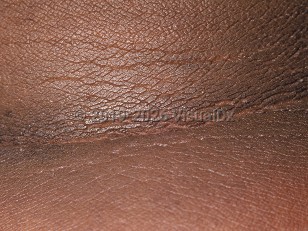
Clinical image of Acanthosis nigricans - imageId=40959. Click to open in gallery.  caption: 'Acanthotic, thickened, ridged, and hyperpigmented plaques on the posterior neck.'
Acanthotic, thickened, ridged, and hyperpigmented plaques on the posterior neck.
Copyright © 2026 VisualDx®. All rights reserved.